What game is Turkey playing?

Research

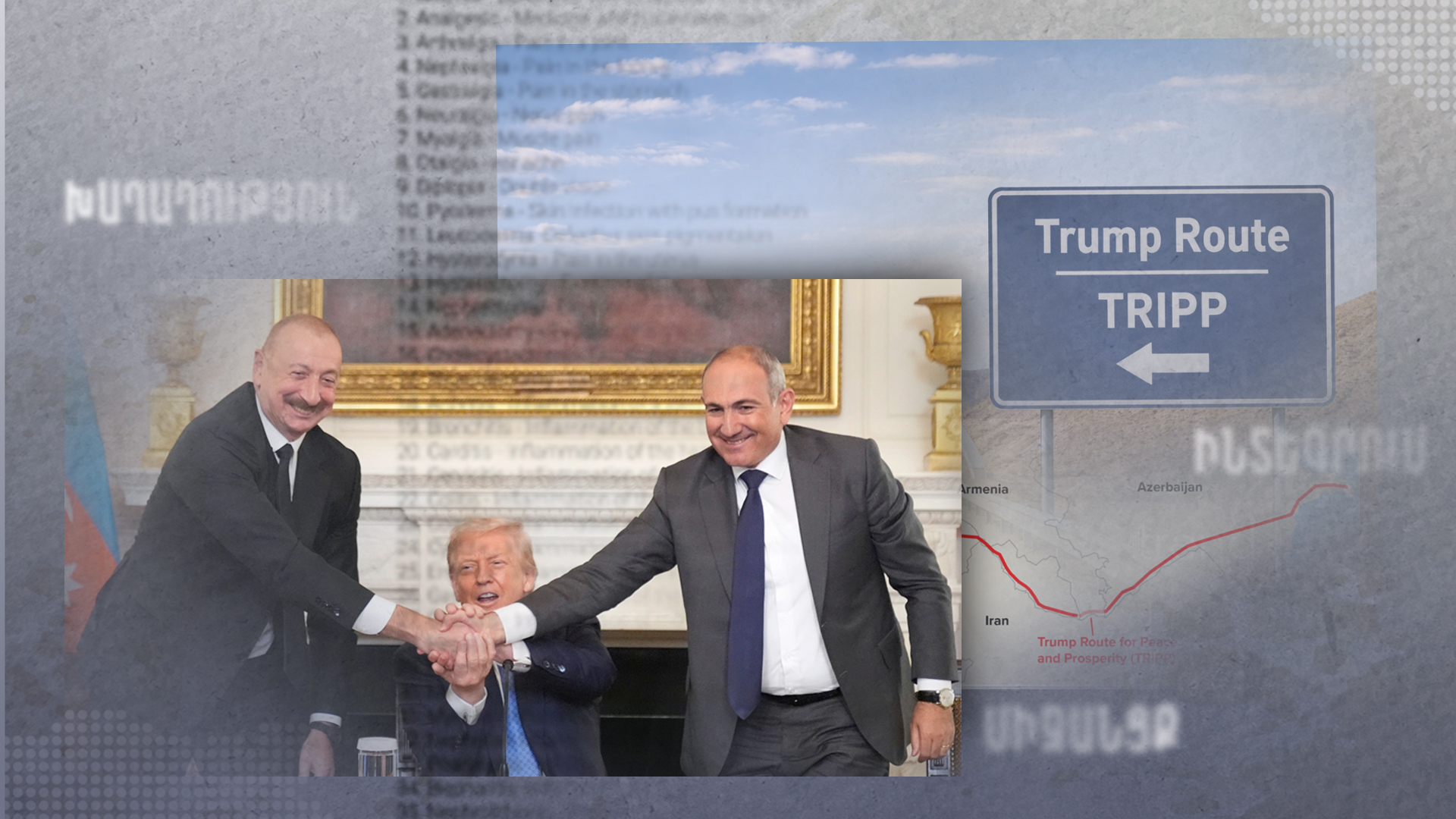
American and European (notably British and French) think tanks often use terms such as “peacebuilding,” “post-conflict reconstruction,” and “regional integration” in the South Caucasus not only with normative or value-laden connotations but also with clear geopolitical and strategic calculations.
For global decision-making centers, the “peacebuilding process” has often served as a strategic tool, introducing into post-conflict environments mechanisms of long-term dominance disguised in outwardly attractive formulations.
For example, at the institutional level, the establishment and deployment of monitoring missions, the placement of relevant networks—combined with border security packages—and the provision of advisory services is nothing other than institutional intrusion into a post-conflict state and management of information flows. This, in turn, creates financial and structural dependency, generating a misbalance in the sovereignty and self-sufficiency of national (state) decision-making centers, all under the guise of “institutional modernization” or “systemic restructuring.”
The next step is to popularize a dubious, unrealistic and exaggerated role for a given state with “intruded” and vulnerable sovereignty, in order to justify or disguise this intrusion with questionable legitimacy. A key component for a state to become a geopolitical factor is the unrestricted accessibility of its land, sea, and air borders with neighboring states—in simpler terms, having open borders. Armenia, for instance, does not have open and unrestricted borders due to horizontal blockades. What prevents Armenia from becoming a “geopolitical factor” is a lack of new transport architecture, which is essentially a covert attempt to institutionalize and publicize corridor logic under the guise of “restructuring the security system.”
WHAT TERMS ARE USED
“Peace,” “corridor,” “integration”: these terms are not merely for enriching scientific categorical apparatus or academic use—they form the architecture of strategic policy.
Constructing this narrative involves terminological manipulation. For instance, think tanks such as The Council on Foreign Relations, The Carnegie Endowment for International Peace, and The Brookings Institution use terms like “durable peace,” “conflict transformation,” “post-conflict normalization,” “confidence-building measures.”
Yet the real content of these terms is, de facto, legitimizing the balance of power by removing the status quo, bypassing justice and comprehensive interests in the peacebuilding process.
Obvious limitations on a state’s sovereignty are presented as constructive steps toward regional peacebuilding. Terms such as “connectivity,” “trade facilitation,” “transit routes,” and “economic corridor” are used. The purpose of this rhetoric is to disguise political and geopolitical concessions under the guise of economic benefit, presenting reductions in state sovereignty as an advantage. This narrative avoids words like “state sovereignty,” “customs control,” or “security jurisdiction.”
This logic is followed by think tanks such as The Center for Strategic and International Studies, Atlantic Council, and The German Marshall Fund of the United States. Their research and analyses aim—under the guise of academic legitimacy, theoretical grounding, and conceptual approaches—to functionally undermine the territorial sovereignty of the weak subject from the conflicting parties and reduce their geopolitical weight in global logistic chains, turning a factor into an instrument.
These processes are presented as “win-win” scenarios or “regional prosperity,” but the real goal is to limit the political autonomy of weaker states, weakening their agency in global logistics and economic architectures, and deepening dependency.
How to Construct an Armenian Counter-Narrative: Institutional Modeling as a Practical-Geopolitical Project?
Conceptual Sovereignty: Exclusion of reactive counteraction and reproduction of foreign narratives in the scientific, ideological and political sense. The Armenian geopolitical counter narrative must be built on terminological sovereignty and external target work. Until linguistic thinking changes, politics does not change. For example:
Western Formulation Armenian Counter-Narrative
Peace process Security regime
Corridor Transport-controlled connection
Connectivity Territorial integrity + communication
Normalization Legal regulation
Regional integration Regional cooperation
Targeted External Work: Armenian think tanks should not work “for the world” but aim to interact with Western decision-making centers in a targeted, precise, agenda-driven, and strategic manner, based on evidence and realist counter arguments rather than emotional appeals. Language should carry the content of sovereignty, the approach should be state-centered, and activities should occur in legal, normative, and politically realistic fields.
Key Content Axes of the Counter-Narrative
Not Allowed: “Peace at any cost”
Mandatory: “Security as a prerequisite for peace”
Note: Peace without security is merely a temporary ceasefire.
Not Allowed: “Regional connectivity”
Mandatory: “Sovereign communication”
Note: Any route not fully controlled by the state is a corridor, even if it is called something else.
Not Allowed: “Win-win region”
Mandatory: “Asymmetric regional risks”
Note: Integration without balance of power becomes irreversible dependency.
Below we present a comparative table on the approaches of six well-known American, British, and French think tanks on the “peacebuilding” process in the South Caucasus. The comparison is made based on a number of political science criteria, from security approaches to geo-economic interests and goals, real, imaginary, and realistic perceptions of the “peacebuilding process.”
| Standards | US | UK | France |
| Major think tanks | Carnegie Endowment for International Peace Atlantic Council RAND Corporation | Chatham House | IFRI |
| Main discourse | Stability, communications, restraints | Energy security, legitimate processes | Strategic sovereignty, balance of power |
| Geopolitical goal | Containment of the role of Russia and Iran | Safeguarding Caspian energy interests | European sovereign role |
| Geoeconomic interest | Controllability of transport and energy corridors | Investment and energy presence | Deepening EU economic integration |
| Security approach | Security reforms, military integration to Western standards | Political-legal normative influence | Expansion of civilian missions |
| The real role of “peacebuilding” | Mechanism of repositioning and influential presence | Ensuring the security of economic and investment policy | Leverage for diplomatic and regional positioning |
| Regional perception | Corridor to the Caspian and Central Asia | Energy hub | The periphery of European influence |
The table clearly shows the differences in the narrative and categorical apparatus of leading Western think tanks: American centers view peace processes as opportunities to create controllable security environments, where disruption of the military-political balance is central, implying institutional reconfiguration or dismantling of de jure alliance formats. In other words, Armenia cannot restructure its institutions and become Westernized without destroying ties with the CSTO and the Armenian-Russian bilateral security system.
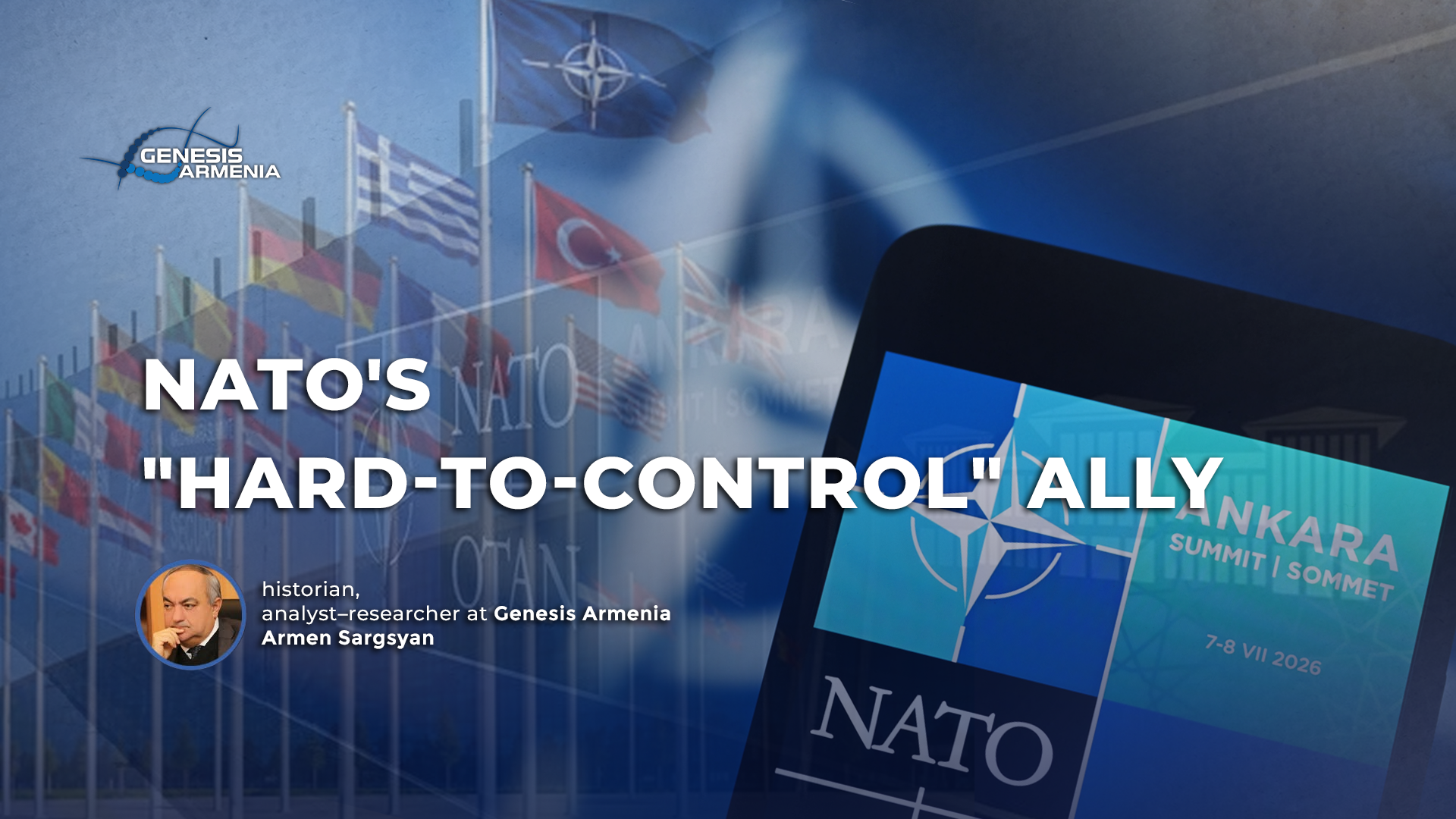
The narrative of British think tanks centers on energy and regulatory platforms, using the “language of peace” and the vision of unblocking regional communications as a tool for investment confidence and closer relations. Almost all British think tanks unconditionally accept Turkey’s pivotal and mediating role in this regard, as a regionally significant player, NATO ally and strategic complement.
For French think tanks, peacebuilding is part of EU doctrinal policy and Pan-European (in reality, national) strategic autonomy. At the core of the narratives of these centers is ensuring a strong European political and civic institutional presence, ensuring a mediating and impartial, balancing presence in negotiation or peacebuilding processes.
In fact, the approaches of the main Western think tanks differ in formulation, but they coincide on a number of issues, in particular, in terms of regional realignments, changes in the military-political status quo, and changes in the transport and energy architecture. In this regard, the discourse of a “peace treaty” often serves as a legitimization of a new security architecture or system, a fixation of a new balance of power, minimizing the role of Russia, Iran, and China.