
What game is Turkey playing?

Research
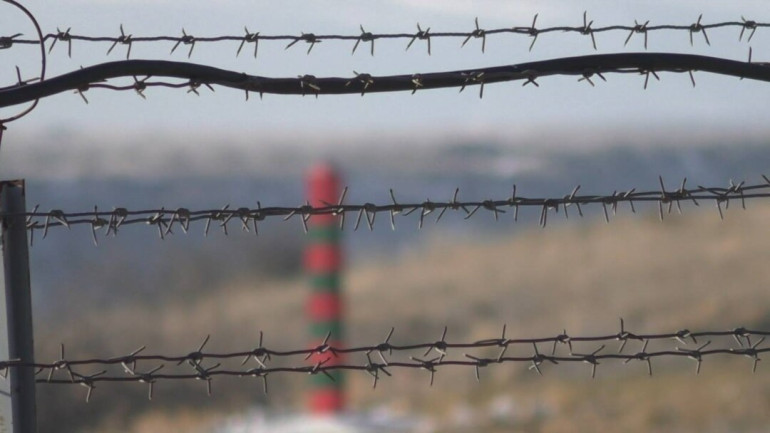
Today, conflicting opinions are circulating regarding the potential opening of the Armenian-Turkish border. Some seek only to praise the policy of opening the border, while others do not. Therefore, let us try to discuss what the objective reality might be if the borders are opened. In the current geopolitical situation, in our view, opening the Armenian-Turkish border would bring some positive consequences, but more negative ones. At first glance, it may seem that it could create significant economic opportunities: cheaper imports, reduced transportation costs, new investments, and increased tourism. However, the reality is much more complex when we also consider today’s existing challenges and the Armenian government’s policies toward these challenges. Let us discuss the potential advantages and risks if the border is opened.
Possible advantages: Turkey is one of our four neighboring countries, and it maintains a strategic hostility toward Armenia. In this geopolitical situation, taking advantage of the Armenian authorities’ fundamental mistakes, Turkey is trying to strengthen its influence over Armenia, including economically. Overall, if the Armenian-Turkish border were opened now, we could benefit from several advantages under these conditions, but we emphasize: not under the current government.
In such a scenario, we would have new export markets and expanded trade opportunities. The opening of the border would allow Armenian producers direct access to Turkey’s large market (85 million consumers). Trade costs would decrease, which could particularly support the export of Armenian alcoholic beverages, mineral raw materials, mineral waters, and certain food products, especially to the border regions of Turkey. However, let us admit that even today, these opportunities exist in an intermediary form, but our market is still not competitive like Turkey’s, whose products have already entered the Armenian market on a mass scale. One of the greatest advantages would be that with a developed economy in Armenia, Turkey’s ports could be used for exporting goods. Additionally, Turkey could open several shorter routes, especially toward Southern Europe and the Middle East, reducing transportation costs and significantly lowering the cost of transporting goods, particularly heavy loads.
The opening of the border would also bring considerable activity in the tourism sector. Bilateral passenger traffic would increase tourism flows. The interest of Turkish tourists (especially non-Muslims) in Armenian historical and cultural sites has already been noticed at the level of private initiatives. However, in our opinion, Turkey would benefit more because, firstly, our historical homeland is in Turkey, and naturally, many people from Armenia would want to visit it; secondly, Turkey’s tourism infrastructure is far more developed, convenient, and affordable than Armenia’s; and thirdly, our historical and architectural monuments do not hold as much interest for Turks because they are Christian landmarks. Our advantage would be the ability to encourage visits to Armenia from our Muslim compatriots living in Turkey. In such a scenario, hotel services and the food business would also be promoted in Armenia.
Thus, opening the border would mainly promote trade, revitalize the local market, and boost the hotel and service sectors—but not under the current government, because the security component is not taken into account in economic policy decisions.
And what are the possible risks of opening the border today? The problem is that close political ties between Turkey and Azerbaijan imply that Ankara, with increased economic influence, would undoubtedly use it as a tool for pressure to extract additional political concessions. Over the past decades, Turkey has become one of the region’s most powerful industrial states, with enormous export potential, while Armenia has a small-scale market. This means Turkish products, benefiting from cheap labor and large-scale production, would quickly enter the Armenian market and displace local producers, especially in food, clothing, and household goods. The Armenian economy, largely based on small and medium enterprises, cannot withstand this competition, potentially creating a so-called “Turkish economic dependency.” Therefore, without defensive policies—such as tariffs or subsidies—the trade deficit may deepen. Consequently, Armenia would become not a producer but a consumer country, dependent on Turkish imports. In this regard, we can recall Georgia’s example. Indeed, the greatest danger is economic dependency, which would place Armenia under economic pressure in exchange for political concessions. This would also risk the closure of many local businesses. Small and medium entrepreneurs would not survive the competition, and local production would suffer significant damage. Turkey already controls a large part of Georgia’s market in food, construction materials, textiles, and other sectors. A similar scenario in Armenia is inevitable and highly dangerous.
Indeed, the deepening of Turkey’s political influence using economic means would result in the imposition of preconditions under economic cooperation, as Turkey already does—for example, on the issue of recognition of the Armenian Genocide, security concessions, and so on.
This scenario is very dangerous because Armenia lacks adequate economic resilience. If opening the borders makes Turkey Armenia’s second main economic partner (after Russia), it would gain serious leverage to influence Armenia’s political course. Naturally, Turkey would also use this to alter Armenia’s demographic landscape, as it does in Georgia, particularly in Adjara—which is extremely dangerous.
It should also be noted that an open border is not only an economic opportunity but also a new channel for informational and intelligence access. For example, humanitarian programs or investment projects could deepen Turkey’s presence in Armenia’s informational and social space. Turkey actively uses economic tools to extend its influence in neighboring countries. The deepening of economic relations is often accompanied by business-intelligence activities, which would weaken Armenia’s security system and give Turkey significant influence over Armenia’s security apparatus.
Armenian-Turkish relations are also different from other regional conflicts due to historical factors. The denial of the Armenian Genocide and Turkey’s official stance regarding Armenia’s historical claims remain major obstacles. Yet, surprisingly, Armenia’s current authorities have voluntarily abandoned these claims and accepted all Turkish-Azerbaijani political demands.
In our view, if the Armenian-Turkish border opens without a clear resolution of these issues or reconciliation mechanisms, it would create an illusion of settlement: economic ties would develop, but political and national dignity issues would not only remain unresolved but would also suffer significant damage. This would deepen social polarization within Armenia and undermine national identity and dignity.
Conclusion
The opening of the Armenian-Turkish border may seem economically attractive at first glance but carries multi-layered political and security risks. Turkey, as a major regional power with a clear geopolitical agenda, will never see Armenia’s strengthening as part of its interests. Therefore, before proceeding with this process, Armenia must have a detailed security plan, which does not exist, and the authorities are not planning to develop one. This is the biggest problem.
What main consequences could the opening of the Armenian-Turkish border lead to in this situation, and what should be done?
In our view, Armenia’s current authorities are not ready for this and are attempting to open the Armenian-Turkish border hastily, without serious calculations or consideration of security factors, pursuing their personal political goals.
Sasun Davidyan
Economist
Armen Sargsyan
Historian