What game is Turkey playing?

Research
Part Two
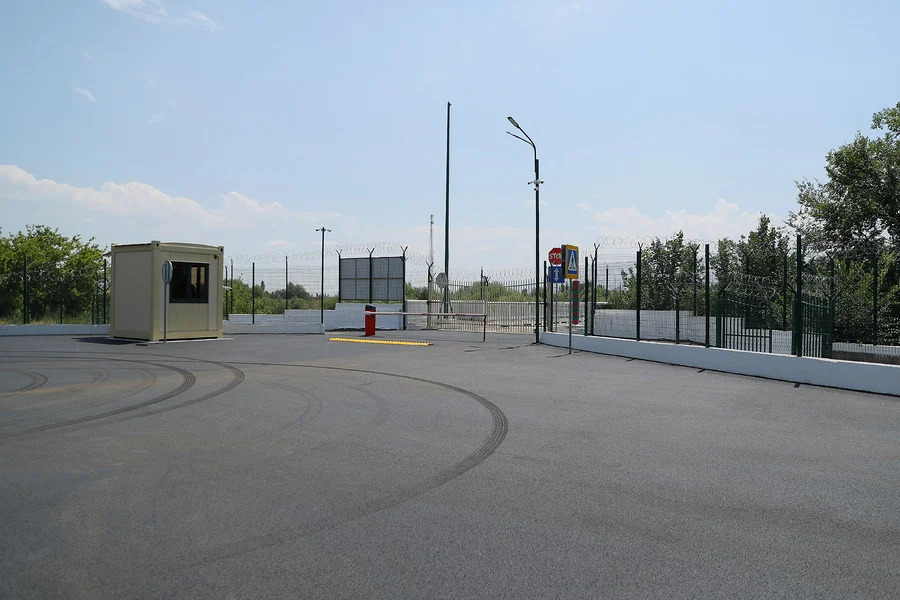
The conflict between Armenia and Azerbaijan has not been resolved through a peace treaty over Artsakh, and the Artsakh issue, as a central component of the conflict, remains unsettled. Currently, there is only a fragile ceasefire based on verbal agreements. Legally, the parties remain in a state of conflict, and under such circumstances, opening the borders—if presented as a “sign of peace”—carries a number of serious risks. In our view, these include:
In recent years, Azerbaijan has repeatedly demonstrated that it uses its economy and infrastructure as tools of political pressure—through energy supply stoppages, border provocations, and other methods. Therefore, without clear international guarantees, opening the borders could turn into a serious security vulnerability.
If the borders are opened without clear delimitation, legal safeguards, and without addressing the Artsakh issue—under such humiliating conditions—Armenia, under de facto pressure, may be forced to accept unfavorable border terms. In this case, the process of “opening borders” would more likely become a tool to enforce territorial concessions rather than a step toward peace. The risk is particularly high in Syunik province, which holds strategic importance for Azerbaijan as a bridge to Turkey and the Middle East.
Azerbaijani capital, through state or semi-state companies, would penetrate the Armenian market, flooding it with cheap, mass-produced Azerbaijani goods—especially in agriculture and food industries. This poses a serious threat to local producers and could lead to the closure of local businesses and loss of jobs.
Therefore, a state defensive policy is needed, particularly through customs and subsidy mechanisms. If Armenia becomes economically dependent on Azerbaijan, this dependence could be exploited for political purposes, restricting Armenia’s sovereign decisions. Economic liberalization must proceed with clear principles of security and balance.
Opening the borders will also bring with it socio-psychological factors. Decades of conflict have created mutual distrust between societies. It is essential that economic processes do not conflict with national security and internal stability interests. Local businesses may come under Azerbaijani influence through loans, investments, or future joint ventures. The near absence of competition could lead to the gradual decline of Armenian enterprises. This would increase economic dependence, which could later be used as a serious political lever by Azerbaijan.
Without political equality, an open border would become a permanent mechanism of pressure rather than a guarantee of peace.
Conclusion
Historically, Armenia’s independence has been not only a military or economic matter, but also a question of identity. If 70–80% of imported goods depend on hostile states, any restriction imposed by them could create a serious crisis. Opening borders could bring short-term economic benefits but, in the long term, without a clear state strategy, would increase external dependence and weaken national security.
In Armenia, this is already visible in several areas:
If Turkish and Azerbaijani channels are also opened, this chain of dependence will become even more complex and dangerous:
Turkey and Azerbaijan would convert their economic presence into a lever of political pressure, for example by demanding certain stances on international platforms, limiting goods circulation for internal or external political reasons, and obstructing Armenian strategic projects.
This shows that the economy becomes a primary field of foreign political influence. Without protective mechanisms, Armenia could easily find itself in economic and political chaos.
Economic relations are directly linked to state sovereignty. When strategic infrastructure and financial flows are controlled by external actors, sovereignty becomes not a legal but a practical issue.
Thus, the economic impact of opening the Armenian-Azerbaijani borders is multilayered. Armenia’s development capacity is currently weak, while the risk of new dependencies is high, especially given that preferred economic partners, Iran and Russia, are already present.
Simultaneously, the state must ensure protective mechanisms for local production—subsidies, sound tax policies, and customs protection. Opening borders is not an end in itself. Without economic protection and strengthening the security system, “open borders” will become a source of dependence rather than development.
In this situation, advocating for border openings without strengthening the security system and addressing multilayered issues would be absurd.
Sasun Davidyan, Economist
Armen Sargsyan, Historian