What game is Turkey playing?

Research
The previous part of the research series can be read at the following link: “The NATO ‘Unruly’ Ally: Why Is Turkey a Constant Headache for the Alliance?”
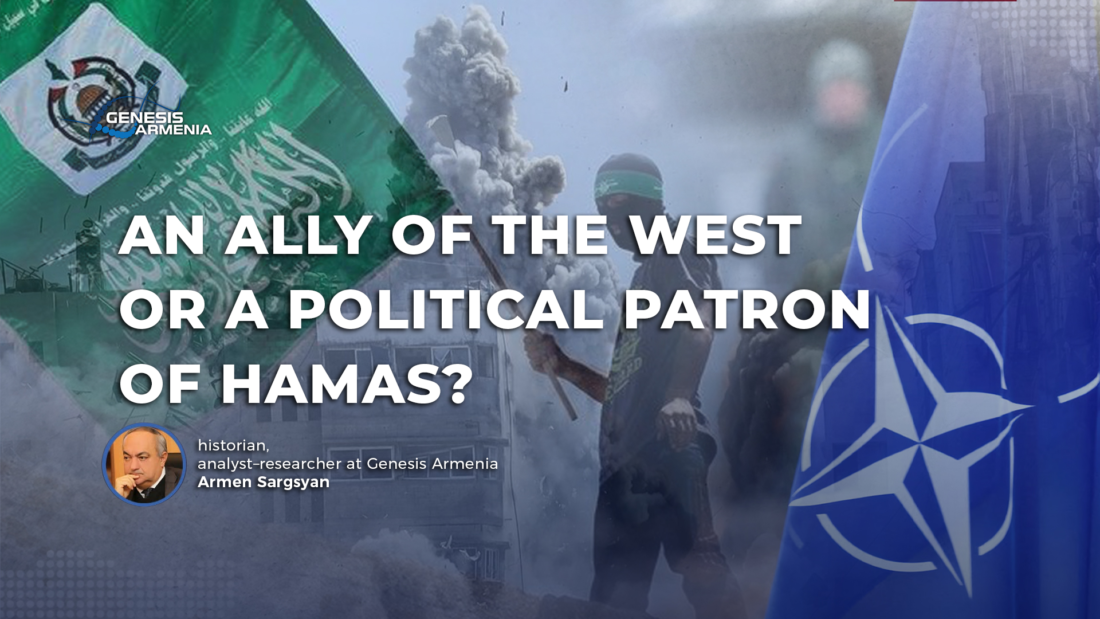
The issue of Hamas remains a recurring source of tension in Turkey–NATO relations and is quite multi-layered. In Ankara’s relationship with Hamas, Turkey does not openly declare any military assistance, but it provides political and diplomatic support to Hamas, while carefully avoiding damage to its relations with NATO and the West.
Turkey has not officially designated Hamas as a terrorist organization, as other NATO member states have done. Instead, it views Hamas as a Palestinian liberation movement. President Recep Tayyip Erdoğan specifically stated in October 2023: “Hamas is not a terrorist organization, but a ‘liberation movement.’” Following these remarks, Israeli Prime Minister Benjamin Netanyahu responded that “Turkey’s leader is supporting Hamas leaders.”
It should also be noted that Ankara officially receives Hamas representatives and defends their positions on the international stage. Several NATO countries view this as an indirect legitimization of an organization they consider terrorist. Turkey also actively supports the Palestinian population by providing aid to the Gaza Strip. In addition, Ankara offers informational and ideological support by criticizing Israel.
For example, during a recent meeting with party members, Erdoğan stated: “Even the people of Israel, who spend all night in shelters, say that the greatest tragedy they have experienced since the Holocaust is Netanyahu.”
By attempting to present Hamas as a resistance force, Turkey occasionally also tries to act as a mediator. In doing so, Ankara seeks to maintain ties with all sides and avoid confrontation, while preserving its strategic position.
There is also an important question: does Turkey provide territory to Hamas to implement certain programs? There is currently no evidence of this. Turkey provides Hamas with political support but avoids direct military assistance.
Israeli and some Western sources also claim that Hamas coordination and liaison groups operate in Istanbul, planning certain activities. Turkey denies this, stating that only political activity is permitted. Some international media outlets further claim that several Hamas members have obtained Turkish citizenship and passports. This issue creates significant tension, especially in relations with Israel. Turkey is also accused of having networks within the country linked to Hamas financing.
Tensions between Israel and Turkey intensified particularly after the Gaza war of 2023–2024. Following the war, Erdoğan made strong statements against Israel and openly supported Hamas’s political positions, further straining relations with Israel. This reflects Turkey’s willingness to go further—at least at the level of political rhetoric.
In this context, Turkey’s Minister of Foreign Affairs Hakan Fidan stated that Israel may shift its strategic focus toward Turkey after its political rival Iran, while also arguing that Israeli policy depends heavily on identifying external political adversaries, adding that “Israel cannot exist without an enemy.”
It is worth adding that during rallies in Ankara in October–November 2023, after the start of the Gaza war, Erdoğan said: “The West speaks about Hitler, but how is Netanyahu different from Adolf Hitler?” He also stated in the Turkish parliament the same year: “Israel is committing genocide in the Gaza Strip.”
Similar rhetoric continued in subsequent statements, including claims that “Netanyahu will be remembered in history as the butcher of Gaza.”
Netanyahu, of course, did not leave Erdoğan’s remarks unanswered. In October 2023, he stated that “Erdoğan is the last person who can teach us morality.” In general, such levels of rhetoric emerge when relations approach near-open hostility, but still fall short of war. In our view, this is largely rhetorical sparring that is unlikely to disappear in the near future or escalate into direct conflict, but will remain a long-term tension.
Thus, in Turkey–Hamas relations, Turkey’s political and humanitarian support for Hamas is established.
There are suspicions that Turkey has organizational and financial involvement in Hamas activities, and that various forms of preparation for armed operations may be possible within Turkish territory.
Overall, Turkey pursues a calculated policy: it maintains a certain degree of political influence but avoids direct confrontation. In other words, it follows a policy of “partial neutrality” in order not to damage relations with the West. So far, Turkey has managed to maintain this balance, although it occasionally faces problems with NATO and the United States, while still trying not to weaken its position within NATO.
Conclusion:
In the next article, we will address a very important question: is Turkey considered a reliable ally within NATO?