

Announcements
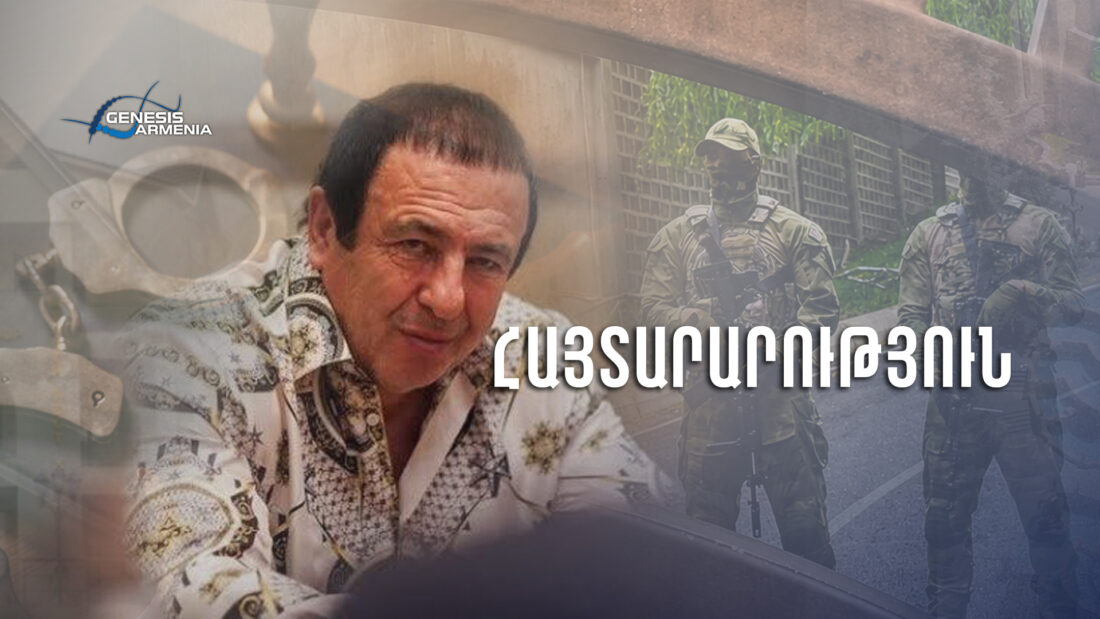
Today, when Prosperous Armenia Party leader Gagik Tsarukyan was publicly taken to the Investigative Committee by National Security Service (NSS) officers, yet another line was crossed in Armenia’s political life — the line separating the rule of law from political retribution. When state security bodies are used not only to conduct criminal proceedings but also to publicly destroy a person’s political image, the very legal foundations of the state are put at risk.
The staged footage, the atmosphere of public humiliation, the unnecessary display of force, and the subsequent two-month detention became, for many, a symbol not of justice but of political revenge — something that Armenian society and Armenians around the world have witnessed over the past eight years.
If the authorities are confident in the legality of their position, they must present their arguments in court, backed by evidence, rather than staging displays of force in front of cameras.
Humiliating a political opponent never makes a government stronger. On the contrary, it once again demonstrates that under the Civil Contract Party government, which came to power through falsified elections, state institutions have been turned into tools for an uncompromising and intolerant political struggle. When the NSS and other law enforcement agencies begin to be perceived by the public as robotic mechanisms carrying out the political whims of those in power, their independence and the credibility of the entire law enforcement system come into question.
Today it may be Gagik Tsarukyan; tomorrow it could be any other opposition figure, journalist, activist, or simply a citizen who criticizes the government. When the law is subordinated to political vendettas and expediency, everyone’s freedom and security are placed at risk.
A state does not become stronger through high-profile arrests, humiliating footage, or the isolation of political opponents. A strong state is built through the impartial application of the law, independent courts, and the principle that even a political opponent who refuses to compromise has an inalienable right to dignity and a fair trial.
History has repeatedly shown that governments that choose the path of political retribution may temporarily silence their opponents, but they can never strengthen the state through such methods. Instead, they only deepen social divisions, weaken state institutions, and undermine the trust on which any democratic state based on the rule of law must rely.