

How political decisions are made in Iran
10.04
2026
Part One
Iran, being a civilization-state with millennia of history and rich experience in independent statehood, now has a complex modern political system. The Iranian statehood dates back at least to the Achaemenid Empire (6th century BCE) and continues to this day. Iran is not only a state with long-standing experience but also a continuous civilization, expressed through its language, culture, and statecraft.
As a result of the 1979 revolution, the Islamic Republic of Iran was proclaimed on April 1, 1979. The country’s governance began to be carried out under a unique theocratic system, based on Shiite Islam, which was declared the state religion. The foundation of the state ideology is called Velayat-e Faqih (Guardianship of the Jurist), meaning the Supreme Leader holds sovereign authority over the political system.
Political decisions in Iran are made through a complex combination of theocratic and republican institutions, with the final word resting with the Supreme Leader.
Key powers are divided among the Supreme Leader, the Majlis (parliament), the Guardian Council, and the Expediency Discernment Council, all of which ensure adherence to Islamic norms.
What is the basic structure of this model?
As mentioned, the foundation of Iran’s political system is religious authority. The main organs of political decision-making in Iran are as follows:
- Supreme Leader (Rahbar)
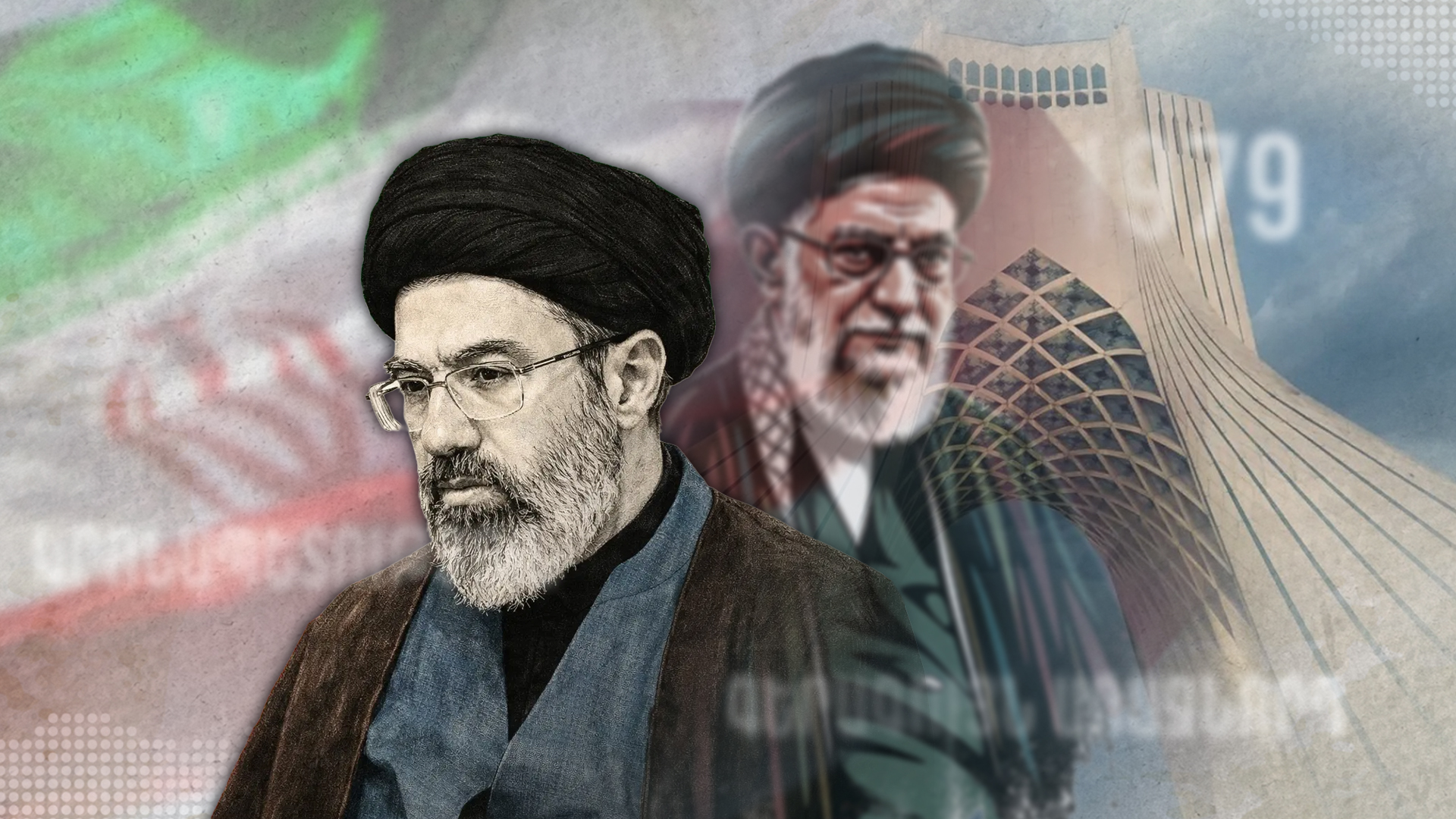
This is the most important center and the apex of Iran’s political system. Currently, Mojtaba Khamenei, the son of the late leader Ali Khamenei, stands at the top. He holds the final authority on decision-making, defines the country’s overall political direction, and oversees it. He also supervises the armed forces, foreign policy, and the security system. He can intervene in any major decision and appoints high-ranking officials. In Iran, no significant decision is made without the Leader’s consent. Naturally, high-ranking clerics (ayatollahs) hold substantial influence. This forms the ideological backbone of Iran’s state system.
- President and Government
The president is elected by the people and, once confirmed, exercises executive power under the supervision of the Supreme Leader. The president manages economic, domestic, and foreign policy, and proposes laws and projects.
- Majlis (Parliament)
The Iranian parliament consists of 290 members. It is a unicameral body that passes laws, approves the Cabinet, and discusses and adopts the budget. However, laws are not considered final until ratified by the Guardian Council.
- Guardian Council
A 12-member assembly (6 clerics, 6 jurists) that also reviews candidates before elections and can veto their participation. It checks whether laws comply with Islamic law and the constitution and can reject them. This council has significant influence because it acts as a “filter” for the entire system.
- Expediency Discernment Council
This council provides final resolutions for disputes between the Majlis and the Guardian Council.
- Supreme National Security Council
This council discusses military, self-defense, nuclear, and foreign policy issues, but its decisions only take effect after approval by the Supreme Leader.
In summary, the mechanism of political decision-making in Iran is based on the supremacy of the clerical authority, with elected bodies functioning under its supervision.
Conclusion
Political decisions in Iran are made not by a single body but through a multi-layered system, yet the real power is concentrated in one point: the Supreme Leader.
In other words, there is a representative (electoral) system (President, Parliament, referendums), but there is also religious oversight.
Simply put, decisions in Iran are made not at a single center, but within a triangle of religious authority, armed forces and economic elite, while the final “veto” always rests with the Supreme Leader.