

The Armenian Church as a pillar of national identity: The dangers of a policy of weakening
16.12
2025
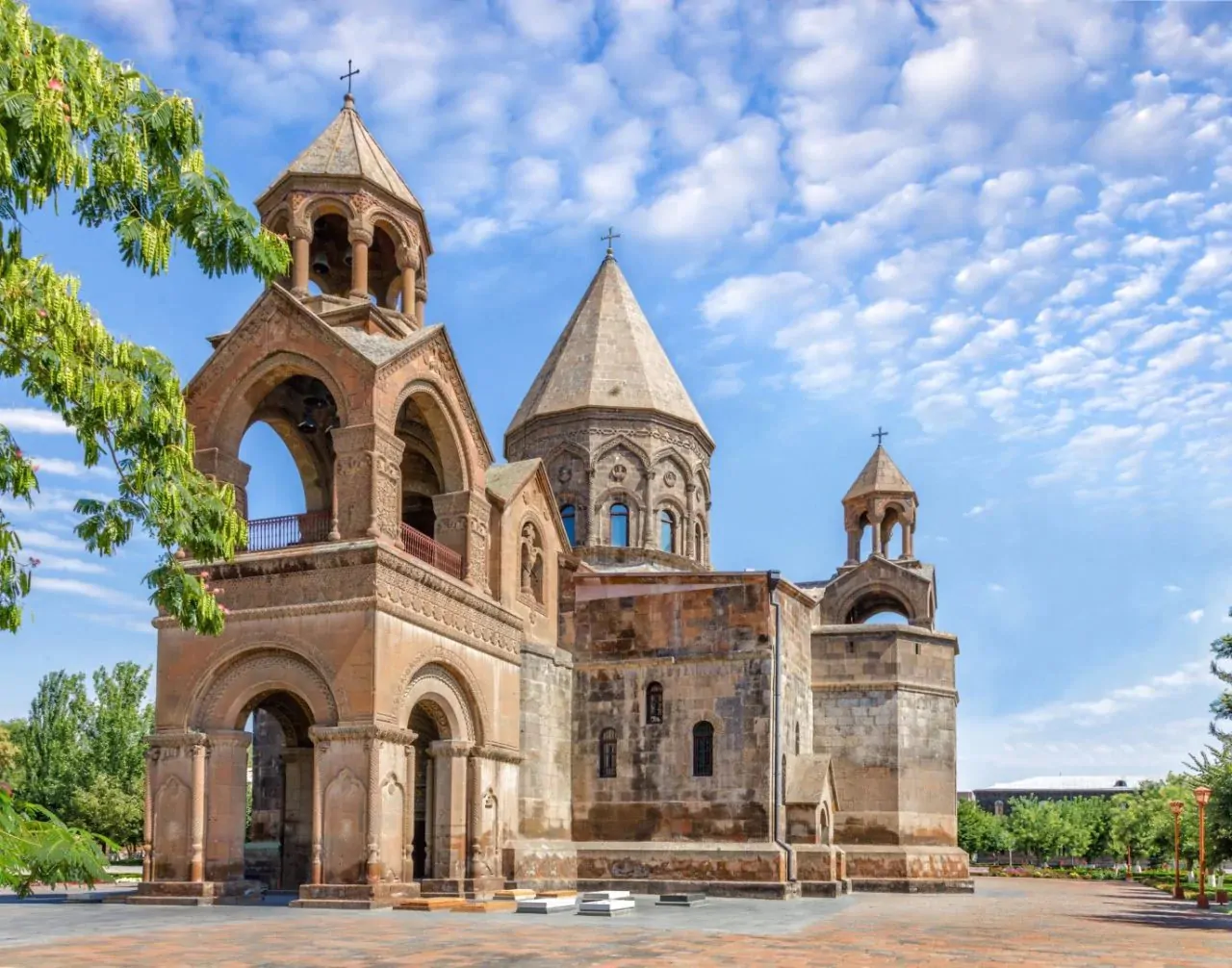
Since the adoption of Christianity, the Armenian Apostolic Church has played in our history not only as a religious institution but also as a center preserving and upholding the values of national identity, education, culture, morality, and statehood, shaping a national value-based environment. This role has been particularly pronounced during periods when the Armenian people lost their statehood and faced deep crises. The Church not only preserved national identity but, in certain cases, even led the national liberation struggle or played a decisive role in these processes (e.g., Avarayr, Sardarapat, etc.). In other words, the Armenian Apostolic Church has been one of the most important pillars of Armenian statehood.
It should be emphasized that the Armenian Apostolic Church has always acted as a unifying force for the nation. Therefore, any opposition against the Church or steps aimed at weakening it should be seen not merely as a religious issue but as an action against the national system and statehood. In the current complex geopolitical situation, the Church strives to fulfill its historical mission, while the current Armenian authorities, taking advantage of various opportunities, pursue a policy aimed at weakening the Church and, more broadly, the institutional foundations of national identity. This not only diminishes the role of the Church but also delivers a severe blow to Armenian identity.
The political force that came to power in 2018 initially tried to present the Church and the state as separate entities; however, the measures actually implemented gradually led to the devaluation of the Church’s role, a decrease in its public perception, and, currently, attempts to subordinate the Church to the authorities, which is dangerous under any government. Educational programs have almost entirely excluded topics on Church history and Christian culture; official cooperation between the Church and the state has ceased, and the authorities have taken various measures against the Church and clergy. The Church is often portrayed as a “relic of the past” or an “underground institution,” while arrests and pressures are carried out.
These approaches, along with other emerging political currents in the national sphere, result in the replacement of the national identity component in state policy with a non-national, neutral civic identity. This is particularly dangerous under current conditions, when the enemy consistently develops its national ideology and is prepared for new wars at any opportune moment. The policy pursued by the authorities toward the Church reflects neither the historical experience of the Armenian people nor the current geopolitical realities. It must be clearly stated that the weakening of the role of the Armenian Church is being carried out at the state level.
The deepening of the state’s negative attitude toward the Church seriously affects society, causing disorientation. Propaganda in social media and certain news outlets portrays the Church as a center of corruption and materialism. While such cases, if they exist, are of a private nature, their one-sided public exposure by the state aims to present the Church as a hierarchical, corrupt institution and undermine the system of spiritual authority. State institutions, directly or indirectly, encourage this policy under the guise of “freedom of speech.”
As a result, public trust in ecclesiastical values diminishes, especially since the authorities emphasize civic and global values while bypassing the national. Although this approach is theoretically justified by human rights and secular state principles, in practice it leads to the degradation of Armenian identity. For centuries, national unity was built around spirituality, patriotism, and the concept of homeland, whereas today there is an attempt to present the homeland as merely a piece of land. This is extremely dangerous, especially given current security challenges, when any weakening of identity could even lead to the loss of statehood.
We believe the weakening of the Church’s role and the secularization of identity will lead to several serious consequences:
- a) Social polarization—between the national content and the “new thinking” wings of non-national identity;
- b) The erosion of the national value system, particularly among youth;
- c) Strengthening of external ideological influences—through globalization, religious sects, and the infiltration of other cultures.
Therefore, close cooperation between the state and the Church should be seen as a pressing contemporary necessity and an important component of national security.
Conclusion
The Armenian authorities do not present their actions as a struggle against the Church, disguising it as a fight against individual clergy, including the Catholicos. In reality, the goal is twofold: first, to interfere in the Church’s internal affairs, implement personnel changes favorable to the authorities, and subordinate the Church; second, to weaken the ecclesiastical institution so that it does not oppose the policies of the authorities. This struggle is ideological in nature and leads to the weakening of society’s spiritual bonds, as evidenced by the absence of spiritual values in official rhetoric.
The role of the Armenian Apostolic Church in the international arena will also be weakened, which is extremely dangerous in current geopolitical conditions. The authorities are effectively attempting to reconstruct Armenian identity, where the concept of “nation” is sidelined, and society is presented as a collective of biological units, detached from its national and spiritual roots. To this end, a “universal” or “neutral” worldview is actively promoted instead of a national one.
National and cultural educational institutions have drastically reduced or excluded national and spiritual topics, weakening the factor of spiritual education. Public discourse promotes the thesis that the Church obstructs the development of a modern state, while the real target is spiritual values. The Church is portrayed as a corrupt institution—initially through individual cases, then systematically—with the aim of undermining it from within. This encourages the “de-spiritualization” of society, and without spiritual and historical foundations, the nation becomes an easy target for external influences.
Thus, attacks on the Armenian Church and national identity are not only religious issues but also questions of statehood and identity.
Recently, criminal cases and arrests against clergy—which, in our opinion, will be ongoing to give a pervasive effect—have become a matter of public discussion. They are perceived by much of society not as legal processes but as political actions against the Church. The constitutional principle of separation of Church and state is being transformed by the authorities into hostile measures, using legal, administrative, and enforcement levers to exert pressure on the spiritual institution, endangering not only the Church but also societal balance.
It is axiomatic that these arrests are political in nature. Clergy are mainly subjected to investigative or judicial persecution when Church institutions criticize the authorities’ political or moral positions, often accompanied by a lack of transparency and procedural violations. These are real mechanisms of political pressure, applied similarly to political figures. Criminal prosecutions against spiritual leaders are often accompanied by media campaigns aimed at creating public distrust toward the Church.
Thus, arrests become not only a legal action but a psychological weapon aimed at diminishing the Church’s role. At the same time, this policy has the opposite effect: it fosters national unity around the Church, as it is perceived as state interference in national and spiritual values to achieve governmental goals. Consequently, societal division deepens, which is dangerous not only for the Church but also for statehood.
Again, the struggle against the Armenian Church weakens the position of the Armenian Apostolic Church within the global ecclesiastical system, which is also a serious blow to Armenian national interests. Political analyst Abraham Gasparyan aptly notes: “What this government is doing against the Church is a struggle against Christianity… and the enemy’s next target is the Church.”
In practice, this policy is gradually taking on a universal character, spreading to all social institutions to establish control. In this dire situation, instead of creating a unified pan-Armenian field against the enemy, the authorities fragment the nation circle by circle.
Sveta Grigoryan
Intern
Armen Sargsyan
Historian