What game is Turkey playing?
Research
Part One
Today, developments taking place in the world—particularly in the Middle East and the South Caucasus—require genuine strategic thinking. Before our eyes, the structure for seeking joint solutions to global governance is changing. Power-based politics is becoming more pronounced, and even wars are no longer a concern when it comes to achieving goals, because international institutions are in a severely weakened state. In this situation, any misstep by small states on the diplomatic stage can be fatal—especially for Armenia.
Before the war began, intensive negotiations took place between the United States and Iran—on Feb. 6 in Oman, and on Feb. 17 and 26 in Switzerland. The negotiations seemed to be progressing successfully, and the threat of war was receding. On Feb. 24, during a speech in Congress, Trump did not address the negotiations, but only stated that Iran must not possess nuclear weapons. Interestingly, on that same day—just a few hours before Trump’s speech—Iranian Foreign Minister Abbas Araghchi announced on social media that Iran has no intention of developing nuclear weapons.
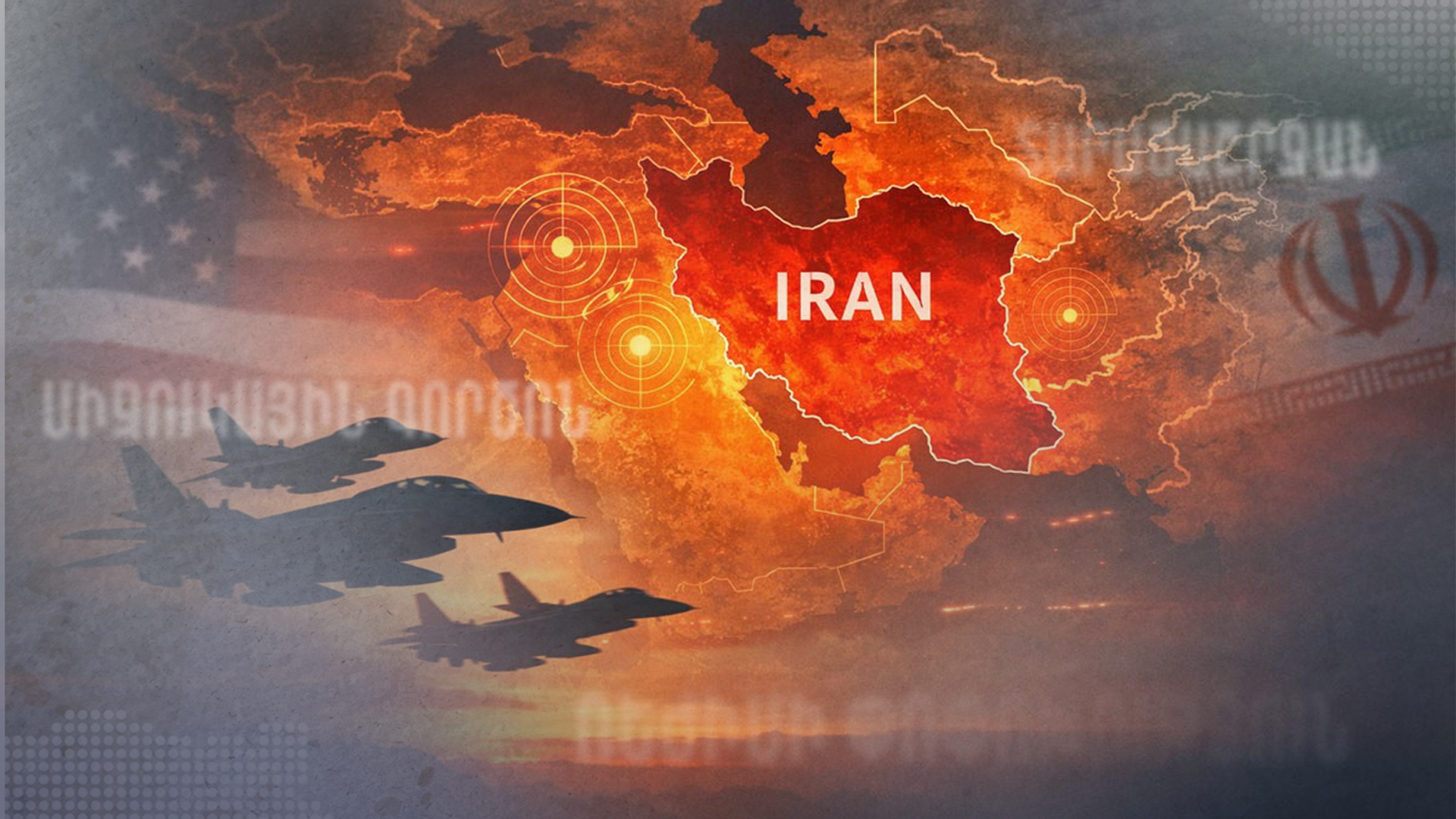
As we can see, although Trump’s and Araghchi’s statements aligned, the United States and Israel launched a war against Iran just a few days later—on Feb. 28. My take on this is that the nuclear factor was merely a pretext for the United States—to create tension, maneuver diplomatically, and present it as the cause of war rather than a pretext. This is despite the fact that, to date, the International Atomic Energy Agency has issued 15 reports, all stating that Iran’s nuclear activities comply with international standards.
The party most interested in the war was Israel, which views Iran as an existential threat. Therefore, everything was done to push Trump into launching a war against Iran. In recent visits to Washington, Netanyahu attempted to justify the war, using the US media and the Jewish lobby in the United States—which had played a major role, particularly in the 2003 Iraq war. He relied on the following main theses:
Let us emphasize again that the primary “push” for the war came from Israel. This is also understood by American society, which is already organizing protests in several US cities against the war with Iran, chanting slogans that the United States should be governed by Americans, not by other countries, i.e., Israel.
Before the war began, the Chairman of the US Joint Chiefs of Staff, General John Daniel Caine, expressing the military’s view, opposed the war with Iran. Trump’s political advisors were also against it, concerned about the upcoming Congressional elections in November.
Ultimately, Europe was not in favor of the war against Iran either. The European Union’s position in the US-Iran conflict is also noteworthy. Before the war, the EU, together with the US, was attempting to impose new sanctions on Iran—not only economic ones, but also targeting military and political figures, even including them on terrorist lists. The goal was to intensify internal economic pressure in Iran, thereby strengthening internal conflict.
The fact that some European states do not share Trump’s approach is illustrated, for example, by the Spanish PM’s statement refusing to allow the US to use Spanish military bases against Iran. This was followed by Trump’s announcement that he would sever all trade relations with Spain. It is also noteworthy that NATO Secretary General Mark Rutte stated that NATO would not participate in US and Israeli actions in Iran. Trump has also expressed dissatisfaction with the United Kingdom, while French President Macron, on the one hand, blamed Iran, but on the other, stated that the war initiated by the US and Israel violates international law.
How can the current situation be assessed in broad terms?
All sides have suffered heavy human and material losses. In Iran alone, 168 elementary school girls were killed during the bombing of a school, and the total death toll in Iran exceeds 780. Iran has also lost significant military equipment, including naval vessels. Several Iranian cities, including Tehran, have been shelled. The United States has suffered 18 fatalities, and the aircraft carrier Lincoln has been seriously damaged and has left the Persian Gulf for the Indian Ocean. Several US military bases in the Middle East have also sustained significant damage.
Following the assassination of Ayatollah Ali Khamenei, movements have intensified against the US in several Islamic countries. The US diplomatic mission in Pakistan has been set on fire, and partially in Iraq as well. American embassies have been closed in several countries (Jordan, Kuwait, Lebanon). Iraqi Sheikh Akram al-Kaabi issued a statement to the US regarding Khamenei’s assassination: “From this moment on, you will have no peace.” Israeli strikes have killed more than 50 people in Lebanon.
Due to Iran’s closure of the Strait of Hormuz, the price of oil on international markets is approaching $90 per barrel, while gas prices have exceeded $3,000. Iran has already launched missile strikes on US military bases in eight countries. The war is indeed gradually turning into a regional conflict.
My take on this is that the war is not unfolding according to the scenario anticipated by the United States.
Did Trump foresee that he could be drawn into a large-scale and prolonged war with Iran, fully aware that Russia and China would not remain passive? Did he have a plan for this scenario, or was he confident in a short-term victory? Did he also take into account the large-scale public protests already beginning within the United States, and how they might grow over time—and how Democrats might use them? I believe Trump expected the war to be short.
The United States already clearly understands the kind of impact a prolonged, large-scale US-Israel–Iran war is having—and will continue to have—on the Middle East and the South Caucasus, regions full of serious unpredictability. In the event of a prolonged war, did the US anticipate popular resistance against itself in several Middle Eastern countries?
In my opinion, Trump, encouraged by his successes—particularly the “operation” in Venezuela and the subsequent international “silence”—made three mistakes: he believed the victory would be quick, he had high hopes that the Iranian people would quickly rise up against their government, and he thought he could stop the war at any moment by initiating negotiations.
What conclusions can be drawn in this situation?
For Armenia, a top priority is to reduce any internal tension and ensure the country’s security—especially in Syunik.