What game is Turkey playing?

Research
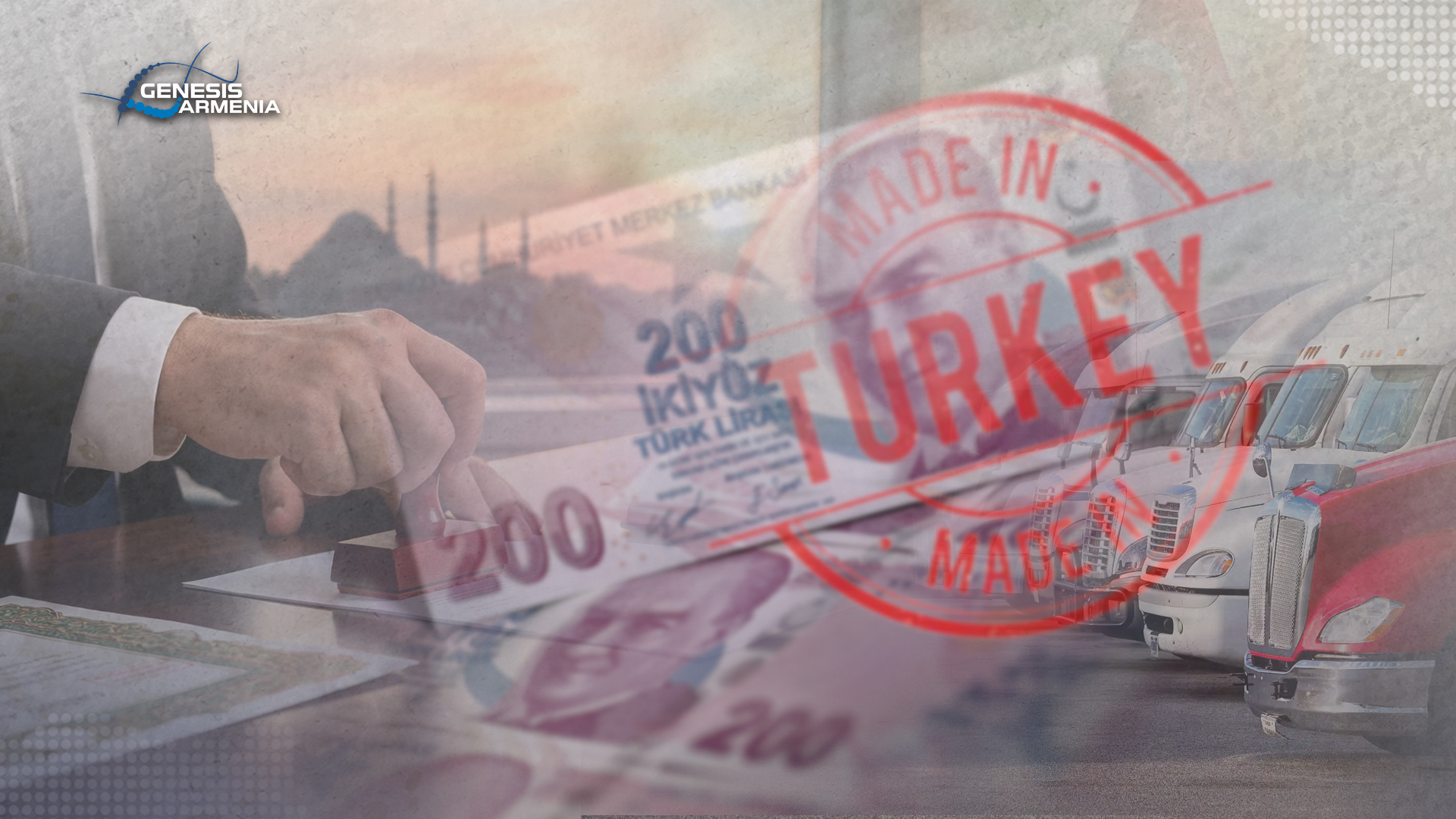
The Ministry of Foreign Affairs of the Republic of Armenia has officially welcomed Turkey’s decision to lift restrictions on bilateral trade with Armenia. The MFA described this step as a “further result” of the relations’ normalization process and expressed hope that it would lead to economic connectivity, the establishment of peace, as well as the full opening of borders and the establishment of diplomatic relations.
Why is this important?
This is not a diplomatic gesture of goodwill, but the launch of an asymmetric economic war and an attempt at geoeconomic colonization.
Just days ago, it was noted that the number of ultra-wealthy individuals in Turkey (oligarchs and defense industry actors) has doubled, while Ankara is clearing its military rear in Iraq and signing alliances with Gulf countries. This massive Turkish capital needs new markets and new logistical corridors to absorb.
When an aggressive, export-driven industrial economy of 85 million people with a weak currency “opens trade” with an economy dozens of times smaller—without diplomatic agreements or political guarantees—it is done with one goal: to destroy the local production of the smaller neighbor. Turkey has understood that what it could not fully obtain through military pressure can be bought with cheap tomatoes, textiles, and plastics, turning Armenia into an economically dependent vassal.
What could change?
Collapse of local production: The mass influx of cheap, subsidized Turkish goods would immediately hit Armenian agriculture, light industry (textiles), and construction materials production, leading to a wave of small and medium business bankruptcies.
Logistics privatization: Turkish capital, under the guise of Georgian or other intermediary offshore companies, would aggressively begin acquiring Armenian warehouses, transport networks, and real estate, effectively taking control of the country’s internal circulation (its “blood”) system.
What could this mean for Armenia?
This euphoric “diplomatic victory” must be immediately cooled with pragmatism and strict tools of national economic security.
Reject the myth of “peace through trade”: History shows that trade does not prevent wars (as demonstrated in Europe during World War I and II, or in Russia–Europe gas relations). Turkey can sell you tomatoes today and bomb your border with drones tomorrow if there is no military balance. Armenia must never accept Turkish goods as a guarantee of “peace”. The guarantee of peace is its own strong army, while Turkish trade is purely business aimed at our wallets.
Strict economic protectionism is necessary: If diplomats are forced to welcome this step, then the Ministry of Economy and the State Revenue Committee must act as national security bodies. The state must immediately apply anti-dumping tariffs, quotas, and strict sanitary and quality controls on Turkish goods. Turkish products must be artificially made more expensive at the border so that Armenian greenhouse and manufacturing sectors do not collapse. Protecting domestic producers is not an economic whim—it is existential protection.
Capital security legislation: Armenia must urgently adopt a strict foreign direct investment (FDI) control law for strategically important sectors (similar to the US CFIUS system). Capital of Turkish origin (or affiliated with it) must be completely banned from entering Armenia’s energy, telecommunications, mining, and major logistics infrastructure sectors. If they control the levers of our economy, they won’t even need weapons to blackmail us.
Asymmetrical exclusion: Turkey is lifting trade restrictions but maintaining a land border and diplomatic blockade, proving that the goal is not political good neighborliness but purely commercial expansion and profit.
Platform for economic offensive: This step aligns with Ankara’s broader geopolitical agenda of using economic attractiveness to soften resistance to the “Zangezur Corridor” and Turkish capital dominance in the South Caucasus.
Harut Artin Arakelyan