What game is Turkey playing?
Research
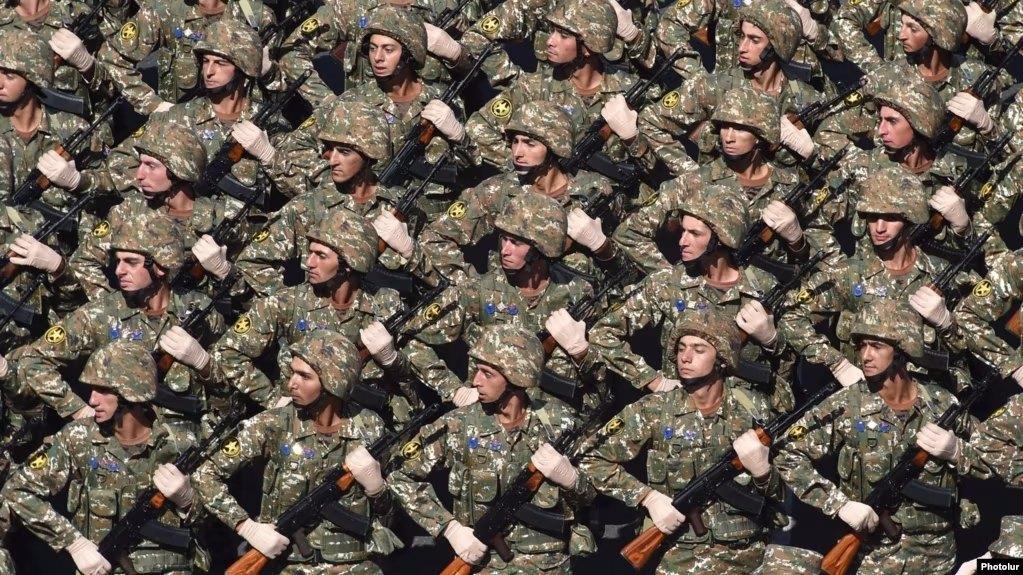
Today the geopolitical situation is in turmoil: states are updating their arsenals, equipping them with innovative and advanced military systems, abandoning old‑generation weaponry, even tracking the enemy’s moves from space. Meanwhile, our country’s authorities act as if they do not live on this planet, suffering from a delusion of imaginary peace. The fact is, in the shifting global military landscape, victory belongs to those who advance in the brutal technological race, who can rapidly modernize their arsenal, make their system more disciplined, their economy diversified, and their propaganda solid and effective. When propaganda lacks real resources behind it, it becomes a bubble that will inevitably burst — it is only a matter of time. Accordingly, Armenia’s current authorities, too, are a bubble: empty in substance, capacity, characters, and messaging. They only know how to make noise like a hollow drum, deceive and mislead, swagger and boast like a cock, claiming they had a clause in their electoral program promising to create a professional army in Armenia, and that they are now working toward that goal.
Failing to understand the real situation, the government of a small — and shrinking — Armenia intends to alter the philosophy of Armenia’s and the region’s security environment. Living under the illusion of false peace, they are doing everything to ensure that Armenia and the Armenian people never again have the possibility to rebuild the army’s former combat capability, never again can define a national security agenda, and never again can take objective action at a historically favorable moment — namely, to neutralize the existential threats facing the Armenian people in the South Caucasus. This is a gradual, multi‑phase policy being pursued to trap Armenia forever under guilt and blood. Let us emphasize that we are not talking about the idea of creating a professional army itself — because to face modern global security challenges, sooner or later we must confront this issue and build a smart, professional army geared toward the predicted fifth‑generation wars. Therefore, anyone who blindly believes in the inevitability of an era of peace or in the myth of the end of war is simply deluded or a victim of self‑deception. An ordinary person may hold such views, but when the authorities start weaving such legends and serving them to society, it becomes a tragedy. Does the government not understand that Baku will use every opportunity to realize its territorial claims against Armenia, ignoring international law and its principles? Of course it understands — and acts deliberately to ensure Armenia will never have any claims of its own. In return, Azerbaijan and Turkey are obliged to help Nikol Pashinyan maintain his power so he can continue fulfilling Baku’s and Ankara’s demands — from changing the Constitution to discrediting Armenian national networks, imprisoning national figures, restricting their activities, and so on. The largest and most viable national network is the army, and the authorities want to restrict its role — but in reality they are trying to extract votes at the expense of our security.
Ahead of the 2026 parliamentary elections, the government is taking new steps at the expense of national security — seeking to appear benevolent toward families with conscription‑age sons, which make up the largest social group, by reducing mandatory service from two years to 1.5 years. If such a measure is implemented, the dismantling of Armenia’s security architecture will reach its logical conclusion — regardless of how professionally justified the transition to a professional army might be, and whether we even have the necessary infrastructure, educational base, finances, and mindset for such a transition, all without damaging our security. Or will border guards be expected to defend Armenia’s borders in wartime, while patrol officers and “beret” units continue to earn triple the salary of the soldiers and officers who hold our frontlines? This is precisely the government’s aim: to devalue the soldier’s and commander’s work, strip them of public respect, and instead of providing dignified pay, turn them into people without prospects in their own country.
Let me analyze this step in detail, compare it with the experience of countries that transitioned to professional armies, present the advantages, essential principles and requirements, financial and structural changes needed, as well as the risks and obstacles. In simple terms: what we gain, and what we lose, if we abandon conscription and move to professional military service. Thus:
In a professional army, service is not generally mandatory; soldiers serve on a contractual basis; service becomes a career and a profession, soldiers and officers undergo regular training, receive competitive salaries, live in improved social conditions, and mobilizations become targeted. As a rule, professional army servicemen receive higher salaries, scholarships, healthcare benefits, etc. The fact that transitioning to a professional army is beneficial is an axiom. The question is when to transition. If done under the wrong conditions, it becomes a destructive and populist move aimed solely at strengthening one’s own political power.
So let me give a brief historical overview:
In recent years, after the color revolutions, when a need arose to instill the image of Russia as an enemy in the European public consciousness, some countries revised their military doctrines and conscription conditions; some even reinstated it. In the Baltic countries, in particular in Latvia, the so-called security stress has been outlined, and Riga is working toward returning to compulsory military service. In the mid-90s, when the Latvians were convinced that the Cold War was over and Russia did not pose a threat, and therefore the inclusion of these states in NATO would guarantee their security, Latvia switched to a professional army, and now, it seems, it wants to go back to what it had. The situation in the Balkans is also difficult, especially in Serbia, which is still recovering from conflicts. In the relatively calmer Croatia, there is also a tendency to return to compulsory service. This means that these states consider the issue of the institution of a professional army in the political and security context of the region. If the Central and Eastern European states — Poland, the Czech Republic, Romania, Bulgaria, Slovakia, Hungary — mainly moved toward NATO/EU integration in the 2000s, then some Scandinavian countries abandoned the professional army and returned to compulsory service, for example, Sweden, Norway (partially), while Denmark retained short-term service.
In addition to external factors, there are also clear patterns related to the internal processes of the state, and there are principles and requirements by which this transition is carried out. I have outlined six steps without which it is impossible to achieve success. They are:
Now, let’s add to all this financial costs, budget increases, housing and educational benefits, bonuses, reorganization of training centers and training costs, technological investments – more expensive, but more effective weapons that require long-term training of professional personnel, financing of reserves – drivers, mechanics, technologists, digital platforms, medical care, family support, etc. Add all this up and you get a frightening number, but that’s only at first glance. Let’s note that compulsory military service is not cheaper than maintaining a professional army. In both cases, huge expenses are required, but there is a general pattern: a professional army is more expensive compared to a compulsory army, because the state must pay full salaries, social packages, housing and pension insurance. Let us note that while in Western countries the average cost of a conscript soldier varies between 5-10 thousand dollars per year, which mainly includes food, clothing, and training, in the case of a professional volunteer the cost also includes salary, insurance, housing, and educational packages, and amounts to an average of 40-60 thousand dollars per soldier per year, that is, in numerical terms, the “cost” of one soldier increases 4-6 times, the total number of the army decreases in number, but takes on a qualitatively different appearance. Let me present a picture of financial expenses in a number of countries:
United States
France (1996–2001 transition)
Germany (since 2011)
Poland (since 2009)
Of course, I’m not talking about defense spending, that’s a separate topic with a lot of accounting. Although I must admit that the countries I have mentioned above are constantly increasing military spending and reducing social assistance packages.
Did you notice that throughout the entire analysis I avoided giving assessments about our army or speaking about its current state? For me, the army is a red line—regardless of who sits at the helm of power or what my attitude is toward the authorities. I will not say much, because foreign and hostile audiences must also understand that when it comes to the Armenian army, Armenians have a unified approach—regardless of the wishes of the Pashinyan camp or their patrons who are trying to break that unity.
Our country faces a real, direct territorial threat, and raising the issue of transitioning to a professional army at this moment entails extremely serious risks that could lead to irreversible heavy losses. Under different circumstances—under a different leadership with a national vision—I would wholeheartedly support the creation of a volunteer-based, mobile, technologically advanced professional army, with strong values, high moral-psychological and combat readiness, and an officer corps shaped by national state-thinking, alongside a powerful militia.
We must enrich the state so that at least in the initial stage we can sustainably finance this professional army, recruit our professional military personnel dispersed around the world, and create the conditions for their return to the homeland and for building an excellent career within the army. The potential exists; we have the resources to create a smart army—human, intellectual, and engineering. We will certainly generate the necessary funding.
I believe global experience can be adapted to our capacities and that we can play the long game—that is, gradually transition to a professional army. In the initial stage, this means increasing the number of contract soldiers, improving professionalism within specialized units, and at the same time preserving the reserve system. This would strengthen rapid reaction capabilities while allowing financial resources to be used smartly and purposefully.
We can fully transition to this system in at least 5–10 years, or perhaps slightly more. Any hasty, uncalculated step outside this logic will be destructive. Pashinyan’s government is not interested in the fate of Armenians or Armenia; he lives by a different agenda that has nothing to do with us. He is a populist and a vote-seeker who believes he has brought peace to our region, forgetting that hundreds of documents like the piece of paper he signed in Washington can be signed—documents that are worth nothing and can never have value if behind them you do not have an army armed to the teeth that protects your security and keeps your adversary cautious.
Nikol is simply stuck in a cycle of cheap pre-election manipulations, and outside that cycle he cannot have a political life. To get out of this dire situation we need work; we need to change the quality of education; we need awareness of national value-systems and the formation of a worldview—not fear of the words Western Armenia or Artsakh. In other words, before changing the security environment and forming a professional army, we must form a national agenda. But as long as these people remain in power, nothing good awaits us, because with them representing Armenia, Armenians and Armenia will not see better days.
They must be replaced, and only after that will we have the opportunity to work day and night and bring our goals to life. This is also the approach of the Genesis Armenia think tank/foundation regarding establishing a volunteer-based professional army.